TOZO A1 Mini Wireless Earbuds Review

TOZO A1 Mini Wireless Earbuds Review: Small Fit, Big Value?
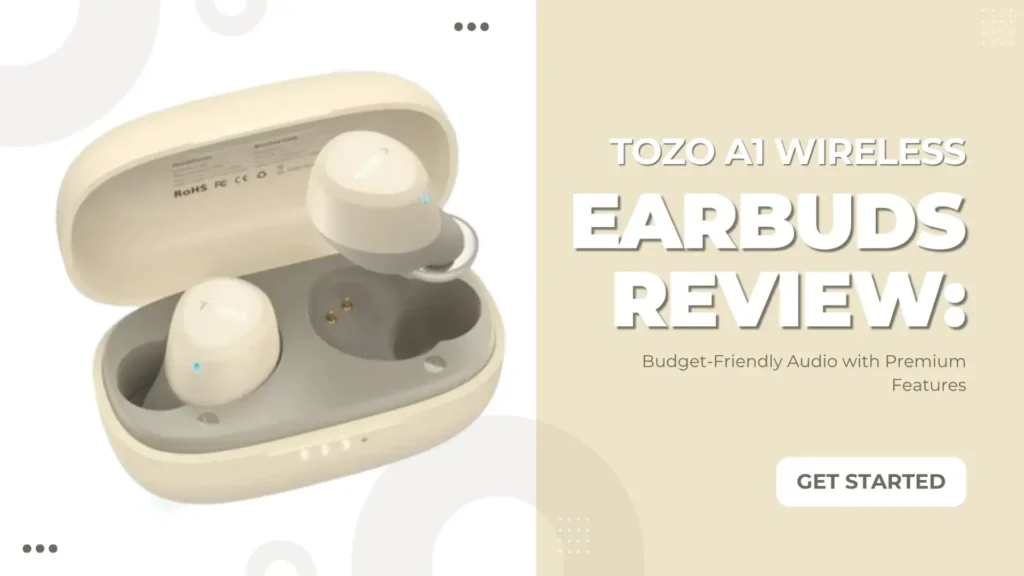
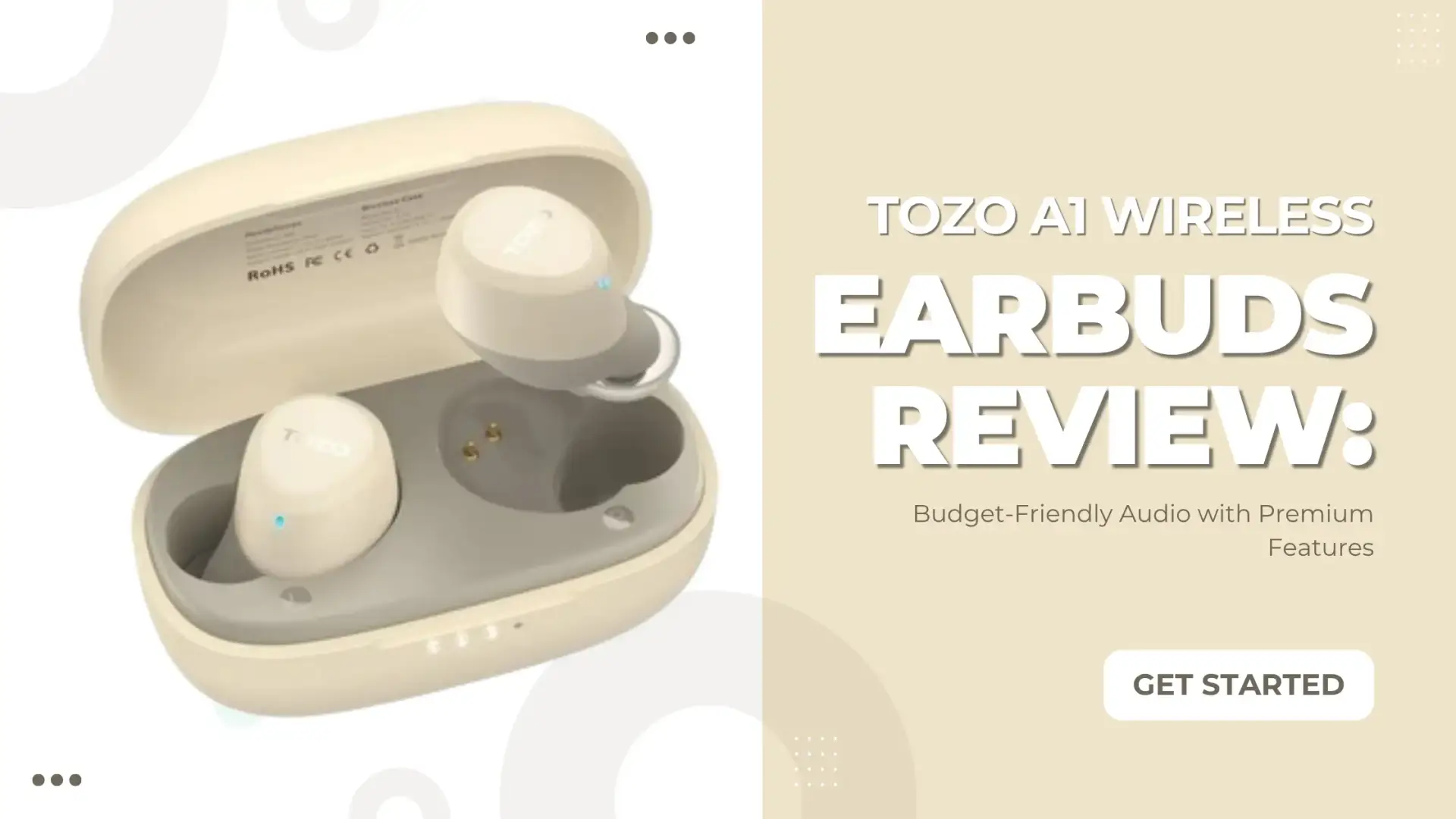
The TOZO A1 Mini is one of the lightest budget earbuds I have researched, with each earbud weighing about 3.7g. My analysis points to a warm, bass-friendly sound and a very small fit.
I recommend it for small ears, commuting, calls, and casual listening, not serious audiophile use.
Key Specifications
Based on my analysis of TOZO’s specifications, technical manuals, and documented user experiences, the A1 Mini is a simple budget TWS design. Small earbuds, a 6mm driver, Bluetooth 5.3, IPX5, and a compact case make up the core hardware.
| Specification | TOZO A1 Mini |
|---|---|
| Driver | 6mm dynamic driver |
| Bluetooth | Bluetooth 5.3 |
| Audio codecs | AAC / SBC |
| Earbud battery | 40mAh each |
| Charging case | 400mAh |
| Rated playback | Up to 7 hours |
| Total with case | Up to 32 hours |
| Earbud weight | 3.7g each, plus or minus 0.2g |
| Water resistance | IPX5 |
| Charging port | USB-C |
| Rated Bluetooth range | Up to 10m |
| Charging time | About 2 hours |
TOZO rates the 7-hour figure at 50% volume using AAC. Battery results change with volume, codec, call usage, and connection conditions.
Who Are the TOZO A1 Mini For?
The A1 Mini makes the most sense when small size and low weight matter more than premium features.
At 3.7g per earbud, the advantage for small ear canals is clear. The compact housing sits lower against the outer ear than a large shell would.
I would consider it for small ears, light commuters, students, office workers, budget buyers, and podcast listening.
The trade-off is feature depth. I do not get ANC, transparency mode, or multipoint connectivity here.
TOZO’s manual does include a dedicated app for EQ settings, control customization, and firmware updates, though I would not buy the A1 specifically for it.
Sound Quality & Real-World Performance
The 6mm driver is small, but driver size alone does not tell me how an earbud sounds. TOZO tunes the diaphragm toward bass enhancement.
My expectation is a warm, punchy presentation rather than a flat studio sound. Bass is the A1’s strongest trait, with enough weight for pop, hip-hop, and EDM.
The midrange is more ordinary. Vocals stay clear for everyday listening, but separation lags behind better $100-plus earbuds during busy passages.
TOZO lists AAC and SBC support, referencing the official Bluetooth 5.3 specifications, a real advantage over basic earbuds limited to SBC alone.
Isolation here is passive, from silicone tips rather than active noise cancellation. A good seal cuts outside sound and helps bass too.
TOZO promotes AI-enhanced ENC for calls, aimed at cutting background microphone noise. Quality still depends on phone placement and surrounding noise.
Battery Life & Charging Reality
The official rating is up to 7 hours per charge and up to 32 hours with the case, measured at 50% volume using AAC. I would treat 5.5 to 6 hours as the realistic planning number.
The hardware runs 40mAh per earbud and 400mAh for the case. Charging both over USB-C takes about two hours, acceptable for this price tier.
The 32-hour figure is cumulative, not a single charge. The earbuds repeatedly return to the case and draw from its battery across the day. For normal daily listening, I would expect several days before the case itself needs a recharge.
TOZO A1 Earbuds Pairing & Manual Guide
The manual makes initial pairing straightforward. Both earbuds connect to each other automatically within about 10 seconds of leaving the case, then one enters pairing mode.
Pairing on Android
- Remove both earbuds from the case.
- Wait for the earbuds to connect to each other.
- Turn Bluetooth on.
- Select TOZO-A1.
- Wait for the connected status.
Pairing on iPhone
- Remove both earbuds from the case.
- Open Settings, then Bluetooth, and turn it on.
- Find TOZO-A1 and tap it.
- Wait for the connection.
TOZO’s official product page describes this same one-step pairing process.
Touch controls
| Action | Control |
|---|---|
| Play/Pause | Single tap either earbud |
| Previous track | Double tap left |
| Next track | Double tap right |
| Volume down | Hold left |
| Volume up | Hold right |
| Voice assistant | Triple tap |
| Answer call | Single tap |
| End call | Hold for 2 seconds |
Common Issues & Troubleshooting
One side not working: I would not assume a dead earbud right away. Check that both are actually charging, then clean the metal charging contacts on the earbud and case. If that doesn’t work, try a full reset next.
Earbuds not pairing together: Turn off Bluetooth, forget every saved TOZO-A1 entry, and remove both earbuds. Tap the touch panel on both five times quickly, wait for the red indicators to flash, then return them to the case, remove again, and pair fresh.
Charging contact maintenance: The manual warns against putting wet earbuds into the case. After exercise, I would wipe the earbuds and contacts dry first.
TOZO A1 vs Budget Competitors
I compare the A1 mainly against other inexpensive sport and everyday earbuds rather than premium ANC models.
| Feature | TOZO A1 Mini | KT1 Q25 | POOQNUR H9 |
|---|---|---|---|
| Driver | 6mm | 10mm | 13mm |
| Bluetooth | 5.3 | 5.3 | 5.3 |
| Codecs | AAC/SBC | Not clearly documented | AAC/SBC |
| Single-charge rating | 7h | 7h | 8-10h |
| Case total | 32h | 120h | 50h |
| Water rating | IPX5 | IPX7 | IP7 |
| Earhook | No | Yes | Yes |
| Earbud weight | 3.7g | Not clearly specified | Not clearly specified |
| Charging | USB-C | USB-C | USB-C |
The KT1 Q25 is the stronger choice for sports earhooks and a larger claimed case capacity, with 7 hours from the earbuds and up to 120 hours with the case. I cover this side-by-side in my KT1 Wireless Earbuds review.
The POOQNUR H9 targets sports use with earhooks, a bigger driver, IP7 protection, AAC/SBC, and up to 50 hours total. For wired gaming instead, see my TOZO Golden X1 Earbuds.
I would still choose the A1 when small size matters most. Its 3.7g weight is the biggest reason to pick it over these larger, sport-focused designs.
Frequently Asked Questions
The A1 Mini makes sense because it does not try to solve every wireless audio problem. Its strongest combination is the 3.7g weight, small housing, AAC/SBC support, and 32-hour case rating.
For small ears and a low-cost pair suited to commuting, podcasts, and everyday calls, the A1 is easy to consider. For powerful noise cancellation or highly detailed sound, I would spend more.